


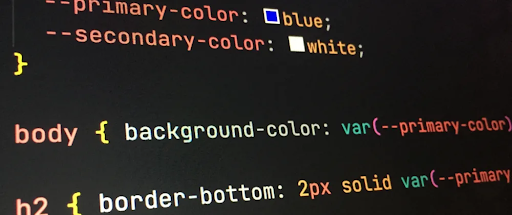
CSS variables, also known as custom properties, are a powerful feature in CSS that allows you to define reusable values and use them throughout your CSS code. They were introduced in CSS3 and have since become a popular way to manage and customize CSS styles.
To define a CSS variable, you use the — prefix followed by a variable name and assign it a value. Here’s an example:
:root {
--primary-color: #007bff;
--secondary-color: #6c757d;
}
In this example, we define two CSS variables –primary-color and –secondary-color with their respective values.
To use a CSS variable, you can simply reference it in your CSS code by using the var() function. Here’s an example:
button {
background-color: var(--primary-color);
color: var(--secondary-color);
}
In this example, we use the var() function to set the background-color of the button to –primary-color and the color to –secondary-color.
One of the benefits of using CSS variables is that they can be easily updated and reused throughout your code. For example, if you wanted to change the –primary-color variable to a different color, you could simply update the value in the :root selector, and all instances where the variable is used would be updated automatically.
In conclusion, CSS variables are a powerful feature in CSS that can help you write more maintainable and flexible code. By defining reusable values, you can easily update and customize your styles, and by using them with JavaScript, you can create dynamic and interactive user interfaces.
Top comments